Ball Family Georgia Collection
From the Province of Georgia to the Southern Frontier
This collection documents the migration and settlement of Ball families and related families throughout colonial and early Georgia. Explore the Dorchester migration, Midway and Liberty County, Revolutionary War service, Burke County, Augusta, Spirit Creek, Bark Camp Creek, Bulloch County, Black Creek, churches, land records, maps, and family histories.
God Willing and the Creek Don't Rise
In Southern tradition, the expression was understood to mean, “God willing, and provided the Creek Nation does not rise in war.” For families traveling through the Georgia and Alabama frontier, a Creek uprising could halt migration as surely as any natural obstacle.
Understanding Georgia
Georgia was chartered in 1732 as the thirteenth British colony, with Savannah established the following year. Its coastal settlements were closely connected to South Carolina, while rivers, Native American paths, military roads, and expanding wagon routes carried settlers into the interior.
The Dorchester migration created the Midway community in what became Liberty County. Midway church records, baptisms, military service, land deeds, and family records document the movement of the Ball family and its related Baker, Lee, Mikell, Thomson, and other families through Georgia.
The Georgia collection follows these families from Midway and Liberty County to Augusta, Spirit Creek, Burke County, Bark Camp Creek, Bulloch County, and Black Creek. Each account distinguishes original records from historical interpretation and family tradition.
The Dorchester Migration to Midway
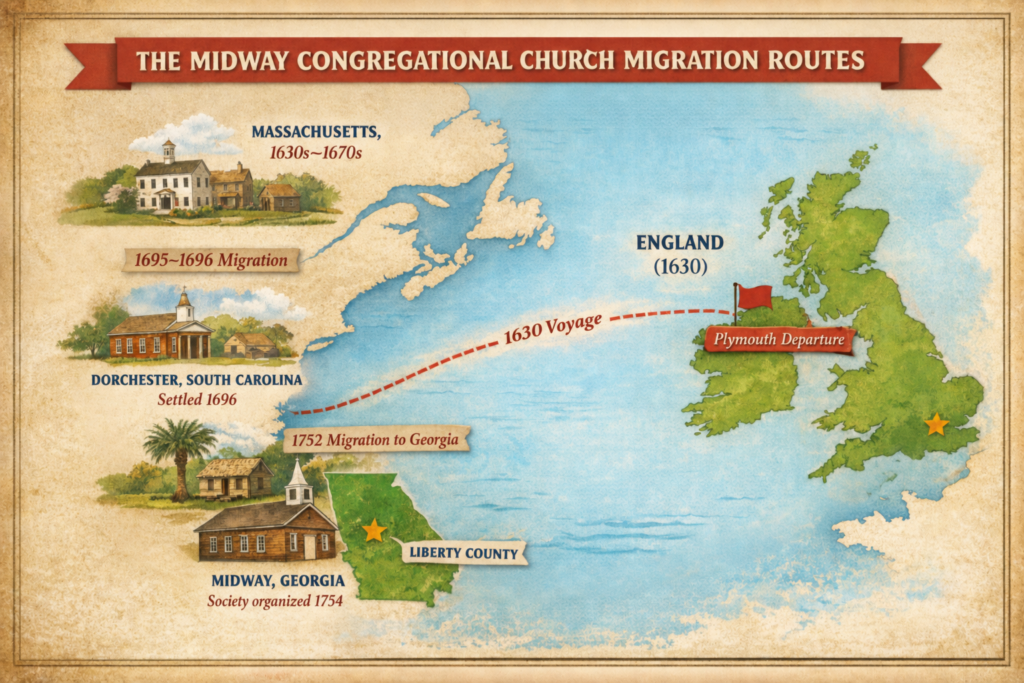
Beginning in 1752, Congregational families from Dorchester, South Carolina, began moving south into Georgia in search of additional land and new settlement opportunities. They established a community around the Midway River in the area that later became Liberty County.
The migrants carried their religious traditions, family networks, and community institutions into Georgia. Midway Congregational Church was organized in 1754 and became an important center of worship, education, public service, and record keeping in colonial Georgia.
Midway’s surviving church records are especially valuable to Ball family research. They document Edward Ball and Rebecca Baker Ball’s connection to Liberty County, the baptism of their daughter Elizabeth on 16 April 1774, and the birth of their son William F. Ball on 31 May 1777. William F. Ball was baptized at Midway on 22 June 1777.
The Dorchester–Midway migration places the Ball family within a larger network of South Carolina families who entered Georgia before the Revolutionary War. Their church records, land transactions, military service, marriages, and family relationships provide the foundation for understanding the Ball family’s Georgia history.
Sources: Midway Church History and the Dorchester Migration; Church at Dorchester; Midway Congregational Church records.
Edward Ball and Rebecca Baker in Georgia
Edward Ball and Rebecca Baker Ball established their family in Liberty County, Georgia, where they became connected with the Midway community. Midway records document the baptism of their daughter Elizabeth on 16 April 1774. Their son William F. Ball was born on 31 May 1777 and baptized at Midway on 22 June 1777.
During the Revolutionary War, Edward served as a lieutenant in Bacon’s Company. He was killed in 1779 at Briar Creek. During the British invasion, Rebecca returned to South Carolina, where the twins Sampson Edward Ball and John Osgood Ball were born.
This documented Liberty County family must not be confused with William Bartholomew Ball and Charlotte Lee, whose Georgia history is presented separately.
Midway Congregational Church
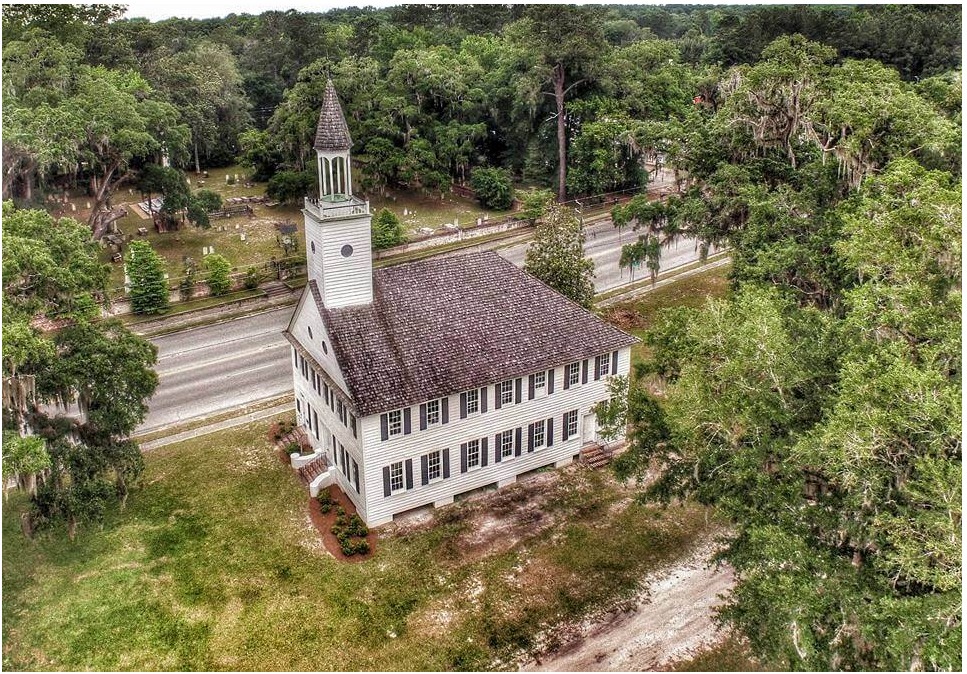
Midway Congregational Church and Cemetery, Liberty County, Georgia. The Midway Society and Church was formally established on 28 August 1754 by Congregationalists who migrated from Dorchester, South Carolina. The historic cemetery preserves the graves of many members of the Midway community and families connected to the Ball family.
Help Preserve Midway Church and Cemetery
The Board of Selectmen of Midway Church and Society is responsible for preserving and maintaining historic Midway Church, Midway Cemetery, and historic Dorchester Presbyterian Church.
To support this mission, Midway Church and Society operates as a 501(c)(3) nonprofit organization and welcomes tax-deductible charitable contributions to help defray repair and maintenance costs.
The listing of Midway Church and Cemetery on the National Register of Historic Places makes this support especially important. Preserving the site’s architectural integrity and using historically appropriate materials can be costly, but both are essential to protecting these treasured landmarks for future generations.
Please consider making a contribution.
Checks may be made payable to “Midway Church and Society” and mailed to:
Midway Church and Society
P.O. Box 202
Midway, GA 31320
For current information about Midway Church and its historic cemetery, use the link below.
William Bartholomew Ball in Georgia
William Bartholomew Ball must be distinguished from William F. Ball, the documented son of Edward Ball and Rebecca Baker. Current research does not support the older claim that William Bartholomew Ball was Edward’s son.
William Bartholomew Ball’s Georgia history is associated with Augusta, Spirit Creek, Burke County, and the Lee family. He married Charlotte Lee on 1 January 1796. Charlotte was the daughter of William Lee and Charity Lee.
The surviving evidence places William Bartholomew and Charlotte within the South Carolina-to-Georgia migration network that later continued westward. Documented records, historical interpretation, and family tradition are identified separately throughout this collection.
Georgia Roads, Rivers, and Ball Family Migration
Georgia settlement followed several connected coastal and interior routes. The Savannah River linked the coast with Augusta, while the Midway, Ogeechee, Altamaha, and smaller waterways supported settlement, trade, churches, and plantations across coastal Georgia.
The road network connected Savannah and Midway with Augusta, Spirit Creek, Burke County, Bark Camp Creek, and the interior frontier. Revolutionary War movements also followed these roads and river crossings, including the routes surrounding Briar Creek.
Farther west, Georgia passports authorized named travelers to cross lands of the Creek Nation. These roads, rivers, ferries, Native American paths, and family connections formed the migration network used by the Ball, Lee, Baker, Mikell, Thomson, and related families.
Georgia Passports Through the Creek Nation
Georgia passport records document the westward movement of related Ball, Warren, Thomson, and Mikell households through Creek lands during 1809 and 1810.
William Bartholomew Ball received a Georgia passport in 1809 authorizing travel through the Creek Nation. By 1810, he was preparing to leave Georgia and later settled near the Chickasawhay River.
On 5 January 1810, John Warren received a passport for himself, his wife, two children, and seven enslaved people. Fleming Tynes of Liberty County received a passport on the same date for himself, his wife, two children, and one enslaved person.
Sampson Edward Ball, son of Edward Ball, R.S., and brother of William F. Ball, received a passport dated 28 February 1810 for himself, his wife Elizabeth, five children, and thirteen enslaved people. He later established his family in the western Pearl River region, near Sandy Hook and the area later associated with Balltown.
On 19 April 1810, Captain James Mikell received a passport from Liberty County for himself, his wife Margaret Thomson Mikell, four children, and five enslaved people. Margaret was a cousin of both Sampson Edward Ball and William Bartholomew Ball.
These passport records document related households moving through Creek lands during the same period. They do not prove that every family traveled in one wagon train or followed exactly the same road. The surviving evidence instead shows a connected migration into the Mississippi Territory through several routes and stages.
The Ball Family at Black Creek
On 9 August 1800, James Mikell and his wife, Margaret Thomson Mikell, sold 200 acres on the North Prong of Black Creek in Bulloch County, Georgia, to William Ball for $100.
The witnesses were Edward Mikell and James Mikell. The deed was recorded in Bulloch County Deed Book A, page 37. Margaret Thomson Mikell was a daughter of James Thomson, connecting the Ball, Mikell, and Thomson families within the same Georgia settlement network.
This deed provides a documented geographic anchor for the Ball family in early Bulloch County and connects the family with neighboring tracts, waterways, roads, and related households.
Burke County, Spirit Creek, and Bark Camp Creek
William Lee’s Georgia history is centered in Burke County, where he established a farm near Bark Camp Creek after years of travel through Virginia, Pennsylvania, Pensacola, the Gulf region, and the Creek Nation.
His daughter Charlotte Lee was born in Burke County in August 1781. Charlotte later married William Bartholomew Ball in Augusta on 1 January 1796. William Bartholomew Ball is also associated with Spirit Creek and the Augusta–Richmond County area.
These locations connect the Lee and Ball families with the roads leading from Augusta through Burke County toward the coastal settlements, Bulloch County, and the Black Creek community.
A Georgia Kinship and Community Network
The surviving records reveal a connected network of Georgia families. William Bartholomew Ball was the uncle of Sampson Edward Ball and William F. Ball, the sons of Edward Ball and Rebecca Baker Ball. The passport records reveal a network of related families preparing to move west during the same period. Edward Ball, R.S. Margaret Thomson Mikell, wife of Captain James Mikell, was a cousin of Sampson Edward Ball. John Warren was connected through his daughter Elizabeth Warren, who married Sampson Edward Ball.
Sampson Edward Ball’s passport was dated 28 February 1810. He later authorized his brother William F. Ball to collect his share of their father Edward Ball’s estate. The surviving account describes Sampson Edward moving his family, household goods, farming tools, livestock, and enslaved laborers westward.
These relationships help explain how migrants could organize a difficult passage through Creek lands. Kinship offered information, supplies, labor, companionship, and security. The evidence supports coordinated migration, but does not prove that every household traveled together in one wagon train.
From Georgia to Mississippi
William Bartholomew Ball married Charlotte Lee in Augusta, Richmond County, Georgia, on 1 January 1796. Their Georgia associations include Augusta, Spirit Creek, Burke County, the Lee family, and the wider network of related families preparing to move west.
A Georgia passport issued in 1809 authorized William Bartholomew Ball to travel through Creek lands. The surviving record supports his planned westward migration but does not prove that he traveled in the same party as the Mikell, Warren, or Sampson Edward Ball households.
William Bartholomew and Charlotte later established their family in the Mississippi Territory. Their Mississippi settlement, children, land, and later history are presented in the separate Ball Family Mississippi Collection.
Georgia Records and Documents
The Georgia Collection brings together the original records, modern transcriptions, maps, and research reports documenting the Ball family and its related families in Georgia.
Featured materials include the Dorchester migration and Midway Church history, Midway baptismal records, Edward Ball and Rebecca Baker evidence, William Bartholomew Ball and Charlotte Lee research, William Lee’s Georgia records, the Bulloch County Black Creek deed, Georgia passports, land plats, and migration maps.
Each document will be presented as a searchable archive record with its original image, a careful transcription, a clear modern reading, a complete citation, and links to the people and locations named in the record.
Georgia Locations in the Ball Family Story
The principal Georgia locations documented in this collection form a connected route from the coast into the interior.
Midway and Liberty County preserve the church and family records of Edward Ball and Rebecca Baker Ball. Savannah served as Georgia’s principal port and government center, while Briar Creek became associated with Edward Ball’s Revolutionary War service and death.
Augusta, Richmond County, and Spirit Creek connect William Bartholomew Ball with Charlotte Lee and the Lee family. Burke County and Bark Camp Creek document William Lee’s Georgia residence. Bulloch County and the North Prong of Black Creek preserve the 1800 deed connecting William Ball with the Mikell and Thomson families.
A Georgia locations map will plot Midway, Savannah, Briar Creek, Augusta, Spirit Creek, Burke County, Bark Camp Creek, Bulloch County, and Black Creek.
Sources and Further Research
Principal sources consulted for this page include:
• Midway Church History and the Dorchester Migration.
• Church at Dorchester and related accounts of the Dorchester, South Carolina, congregation’s migration into Georgia.
• Midway Congregational Church records, including the Ball family baptismal entries.
• New Georgia Encyclopedia, “Midway,” documenting the 1752 settlement and the establishment of the Midway Society in 1754.
• Midway Museum, “Midway Church,” documenting the organization of the Midway Society and Church on 28 August 1754.
• Edward Ball and Rebecca Baker Evidence Report, including Liberty County, Midway, and Revolutionary War records.
• Georgia passport records documenting travel through Creek lands during 1809 and 1810.
• Bulloch County, Georgia, Deed Book A, page 37: James Mikell and Margaret Thomson Mikell to William Ball, 9 August 1800.
• William Lee and Charlotte Lee family records, correspondence, Bible traditions, and Georgia research.
• Identifying the Father of William Bartholomew Ball, including the evidence separating William Bartholomew Ball from William F. Ball.
Additional Georgia land, church, military, court, tax, and family records will be added as they are verified and entered into the Ball Family Association Digital Archive.
Research Note
Documented records establish the Dorchester migration to Midway, the Ball family’s Liberty County baptisms, Edward Ball’s Revolutionary War service, the 1800 Black Creek deed, and the Georgia passports issued for travel through Creek lands.
Continuing research will examine the precise locations of Ball and Lee properties at Spirit Creek, Bark Camp Creek, Burke County, Bulloch County, and Black Creek; the exact routes taken between these communities; and family relationships not explicitly stated in surviving records.
Original records, modern transcriptions, historical interpretations, and family traditions are identified separately. Conclusions will be revised whenever stronger documentary or DNA evidence becomes available.
Genealogical Research Collections
Explore genealogy, historical records, military service, maps, and more than three centuries of Ball family history.




Featured Collections
Explore some of the Association’s most significant historical collections, featuring Revolutionary War service, colonial South Carolina, and generations of preserved family research.
Revolutionary War Collection
Discover the Ball family’s military service during the American Revolution through militia rolls, pension files, service records, battle histories, maps, and original research documenting the sacrifices and achievements of generations of Ball descendants.
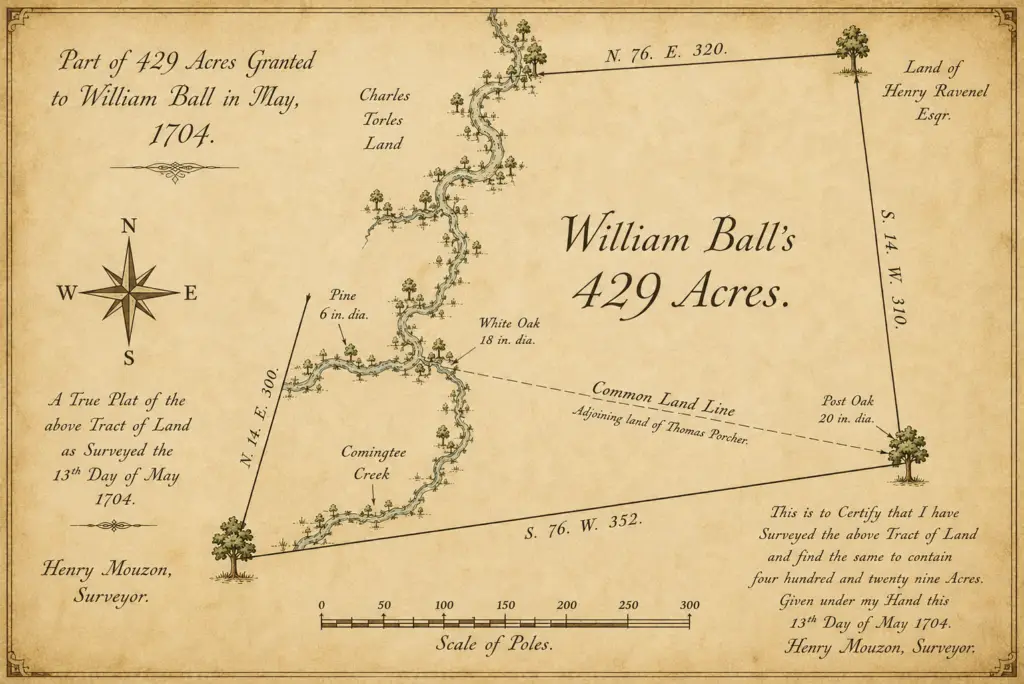
Colonial South Carolina Collection
Explore original colonial land grants, plats, deeds, parish registers, probate records, and early settlement documents documenting the Ball family’s first generations in colonial South Carolina.
Museum Collection No. 1704-01
Original survey plat of William Ball’s
429-acre land grant.
Surveyed 13 May 1704 by Henry Mouzon.
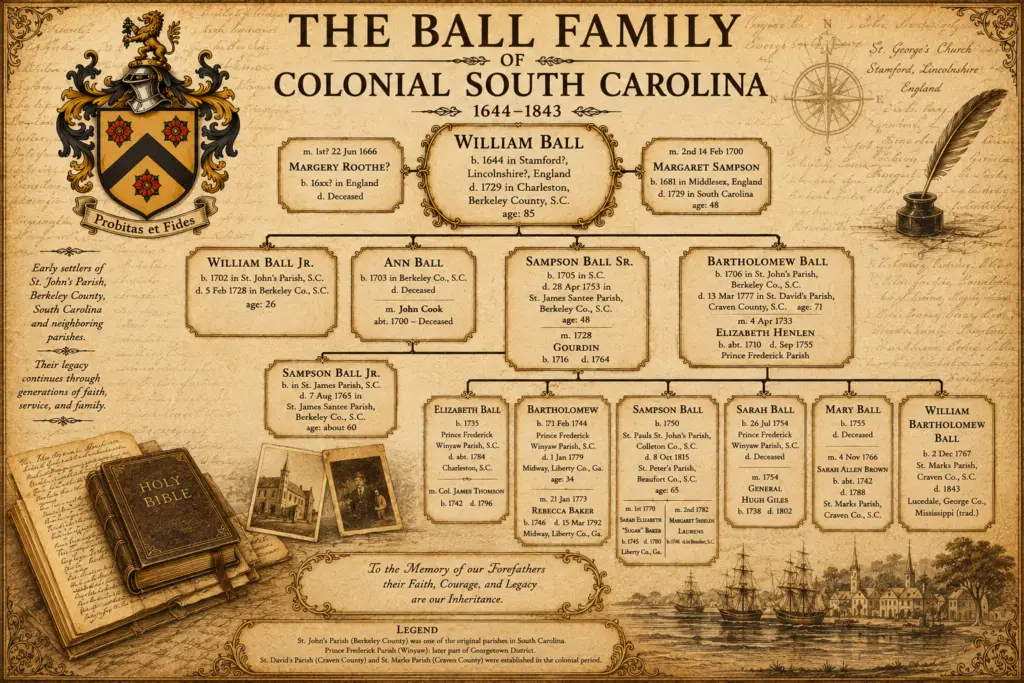
Ball Family Genealogy
Search family lines, descendants, photographs, Bible records, cemetery surveys, and generations of documented Ball family genealogy.
Museum Collection No. F-1704-01
Founding generations of the Ball family in Colonial South Carolina
From William Ball (1644–1729) through the third generation
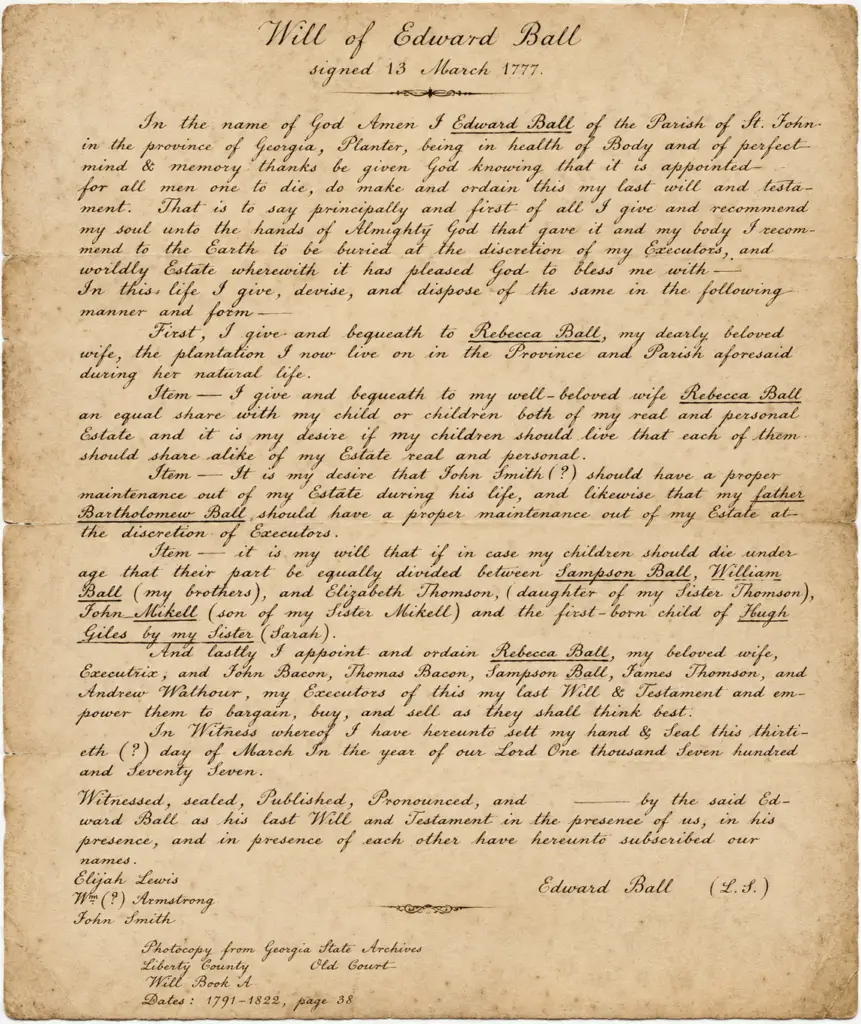
Historical Documents
Browse original wills, letters, church records, manuscripts, photographs, newspapers, and rare historical publications preserved by the Ball Family Association.
Museum Collection No. 1777-03
Last Will and Testament of Lt. Edward Ball
Signed 13 March 1777 • Georgia State Archives
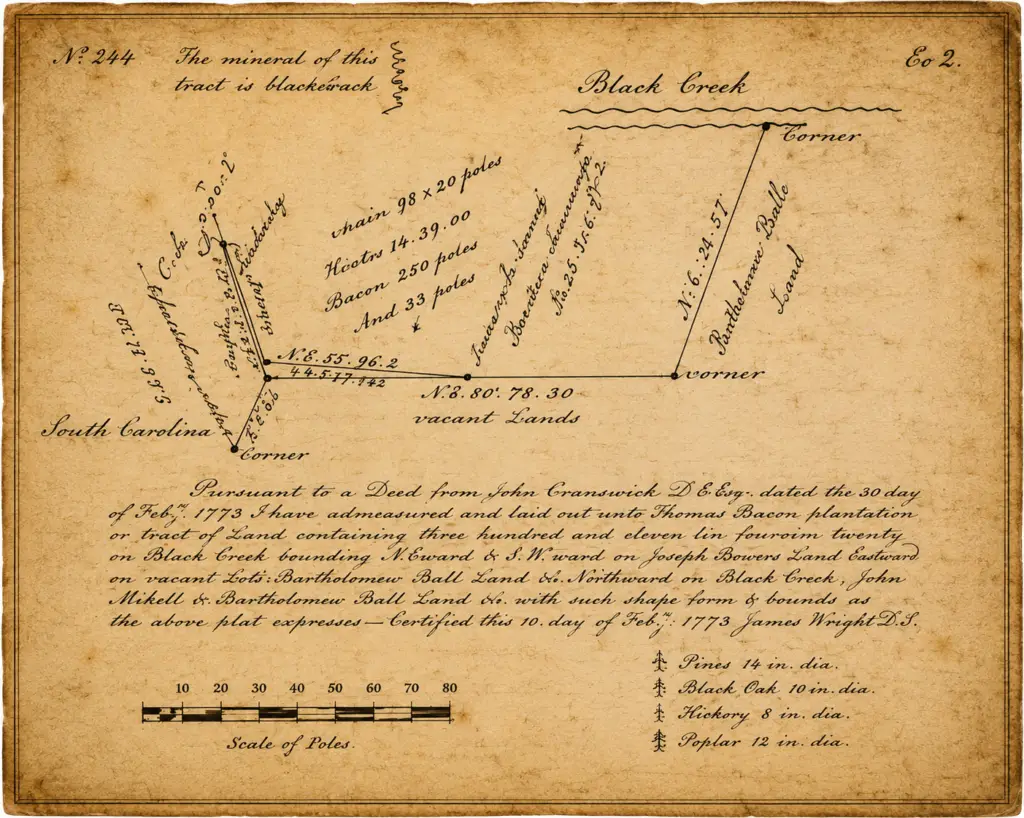
Maps & Land Grants
Explore historic maps, plats, surveys, property records, and land grants that document the movement and settlement of Ball families across America.
Museum Collection No. 1773-02
Black Creek survey plat showing Thomas Bacon’s plantation and adjoining Ball family lands Surveyed 10 February 1773 by James Wright, D.S.