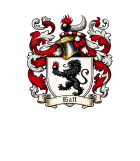
BFHA-RC-000008
Research record and source registry for Elizabeth Ball. This archive entry preserves the corresponding publication section for website research review.
Publication excerpt:
ELIZABETH BALL: Bartholomew; William, Sr. Elizabeth Ball was the first born of Bartholomew Ball and wife Elizabeth Henlen. 1 The date and place of her birth, marriage and death is unknown but it is evident that she grew up in the Prince Frederick Winyaw Parish – Queensborough Township area of Craven County, South Carolina. This area is now the counties of Williamsburg, Florence, Marion, Georgetown, and Darlington. 2 Elizabeth married James Thomson and “lived on the Black Mingo,” which is a river that flows through and is the source of drainage of a low swampy area of present day Williamsburg and Georgetown Counties. James Thomson was a planter. Low swampy areas, such as the Black Mingo, were sought after by farmers and planters of that day because of the moisture in the ground and the natural fertility. James Thomson was born before 1742 and died in Hampton County, South Carolina, on the Savannah River, about 1795/1796. James Thomson and his wife and children left the Black Mingo area about 1774 and settled in St. Peters Parish, Beaufort County, South Carolina. That portion of Beaufort County was subdivided into the counties of Allendale and Hampton and James and his family found themselves in Hampton County. There he distinguished himself for his bravery and leadership during the Revolutionary War. He had served as a Captain during the Cherokee War of 1759 – 60 up in the Cheraw District and for three years in the Pipe Creek Company of Light Horses(?) of Hampton County during the Revolutionary War, emerging with the rank of Lt. Colonel. He served St. Peters Parish in the Provincial Congress in 1775 and continued to represent the district and parish in the General Assembly after the War as the Commissioner of Lands. He was ultimately promoted to the rank of a full Colonel. His dress sash, sword and walking cane, presented to him by Indians whose plight of discrimination and oppression he championed, may be seen today at the DAR Museum Washington, D. C. 3 Elizabeth Ball Thomson died about 1784. In 1783, her husband issued to her a tract of land in Hampton County, acreage unknown. In 1784, she and her husband were taking their children to Charleston to enroll them in the better schools there. It was on this trip that Elizabeth died. The cause of death and the exact date and place of burial of Elizabeth has been forgotten with the passage of time. 4 Elizabeth Ball and James Thomson’s children were Elizabeth, who married her first cousin, John Mikell, Jr.; Margaret, who married her first cousin, James Mikell (John and James were brothers); and James Thomson, Jr., who married Margaret ____________ and died in 1816. 5 Colonel Thomson remarried in 1785 and had three sons and a daughter born to this union.635 REFERENCES 1. South Carolina Probate Department Book 83 – A, page 313, Guardianship Papers Signed by Bartholomew Ball on his minor children. On file at the State Archives, Columbia, South Carolina. 2. South Carolina Department of Archives and History, Alphabetical Index of Land Records, Roll 1, page 1021. 3. Both Sides of the Swamp, by Mr. T. Oregon Lawton, Attorney at Law, Allendale, South Carolina.; a descendant of James Thomson, Sr. and his second wife. 4. Family tradition as told by Mr. Lawton to this writer. 5. South Carolina Historical and Genealogical Magazine, Vol. 27, pages 212-214. 6. Family tradition as told by Mr. Lawton to this writer.36